
We’ve already covered the fundamentals of creating a great in-store audio ad: keep it short, make it relevant, design it for the store environment, and give shoppers a clear reason to act.
But once you get the basics right, there is another opportunity.
Don’t just create a better ad. Create a smarter one.
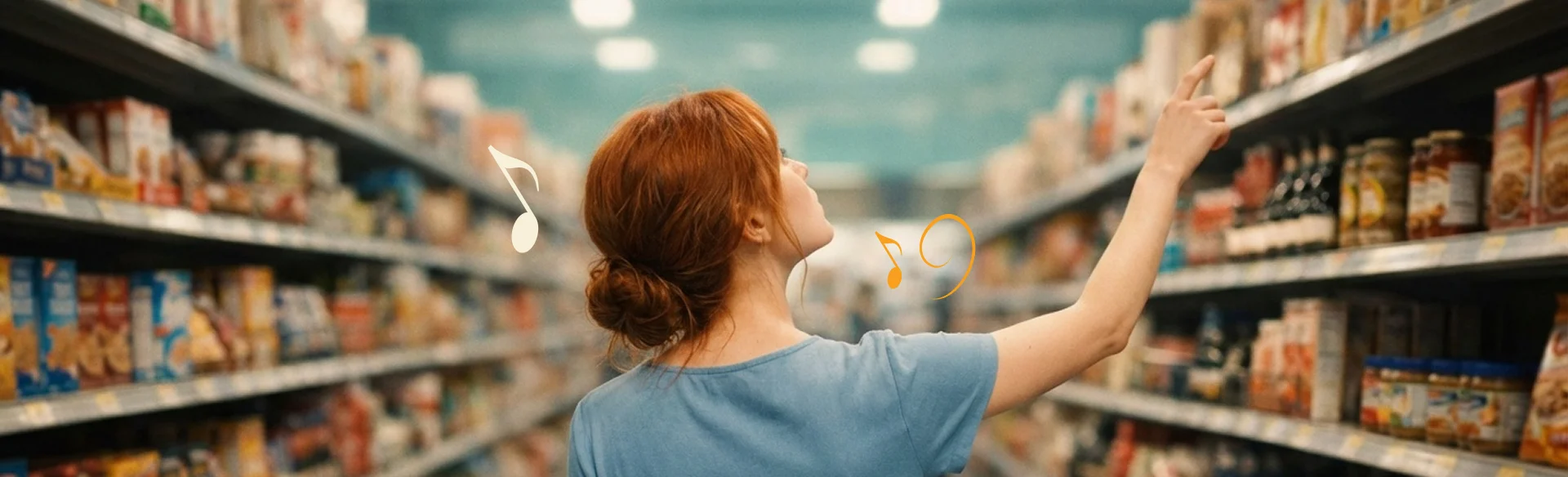
In-store audio reaches consumers at a unique moment: they are already shopping, already making decisions, and often only meters away from the product being advertised.
For brands and retailers, this creates an opportunity to use timing, context, local relevance and existing campaign assets to make in-store audio significantly more effective.
Here are some ways to take it to the next level.
1. Right Message. Right Moment.
Not every hour in a store has the same value for every product.
Take beer.
A beer ad playing at 10:00 on a Wednesday morning and the same ad playing at 17:00 on a Friday shouldn’t necessarily have the same value.
More importantly, it shouldn’t necessarily be the same ad.
Brands can analyse when shoppers are most likely to purchase a particular product or category, then adjust both frequency and creative around those moments.
Ready meals become more relevant as shoppers start thinking about dinner. Snacks and drinks may become more relevant ahead of the weekend. Coffee can have a different role in the morning than later in the day.
Seasonality matters too. Christmas, Easter, summer holidays, back-to-school periods, major football matches and local celebrations all create different shopping missions.
The principle is simple:
Right message + right shopper mindset + right moment.
2. Think in Occasions, Not Just Promotions
Not every effective in-store ad needs to announce a discount.
Sometimes the most powerful thing an ad can do is put an idea into the shopper’s head.
“Heading away for the weekend?”
“Planning a picnic?”
“Big match tonight?”
“Don’t forget the marshmallows.”
“Make sure you have enough water!”
These messages create a shopping occasion.
And in-store, the shopper can act on that idea immediately.
An ad on social media might make someone think about what to buy later. An in-store message can inspire them to add another product to their basket within minutes.
That makes in-store audio particularly powerful for cross-selling and incremental purchases, not only promoted products.
3. Get to the Message Immediately
In-store shoppers are moving.
They may enter an audible area halfway through an ad. They may be talking, checking a shopping list, comparing prices or deciding between products.
Don’t spend the first four seconds of a 15-second ad on a music intro.
Get to the message immediately.
Music, sonic branding and sound effects can all add value—but they should support the message rather than delay it.
Instead of:
[Music intro] → “Friends coming for dinner tonight?”
Think:
[Music starts with voice] → “Friends coming for dinner tonight?”
Every second matters.
A useful target for many in-store messages is 15 seconds, with the voice starting almost immediately.
4. Don’t Automatically Reinvent the Campaign for the Store
A shopper may have already seen a campaign on TV, YouTube, social media or connected TV, or heard it on radio or streaming audio.
Use that familiarity.
Keep recognisable campaign elements:
The voice. The music. The sonic identity. The tagline. The campaign idea.
Then compress and adapt them for the point of purchase.
If the wider campaign says:
“Tonight tastes better with Brand X.”
The in-store version might become:
“Tonight tastes better with Brand X. Pick yours up in the chilled section.”
Same campaign.
Different context.
Much closer to purchase.
In-store audio can become the last touchpoint in a wider media journey, connecting brand awareness generated outside the store with an opportunity to purchase inside it.
5. Localise the Idea, Not Just the Language
A message that works in Manchester may not feel natural in Paris, Berlin, Madrid or Amsterdam—even when it is perfectly translated.
Shopping habits, humour, meal occasions, promotional language and cultural references vary considerably between markets.
So localisation shouldn’t simply mean translating an English master script.
Keep the campaign idea consistent, but allow local teams to adapt the way that idea is expressed.
The same applies within multilingual markets and regions.
The objective is for the ad to sound like it belongs in that store and in that market—not like a global campaign that has been translated word for word.
6. Tell a Tiny Story
Short doesn’t have to mean boring.
And conversion-oriented doesn’t have to mean shouting a price.
Even within 15 seconds, an ad can create a small moment:
“Long journey ahead?”
“Still deciding what to cook?”
“Watching the match tonight?”
Each immediately creates context.
Then introduce the product.
Think:
Situation → Need → Product → Action.
For example:
“Friends coming over tonight? Make sure the drinks are cold. Pick up Brand X from the chilled section.”
It’s storytelling designed for someone who can act on the story right now.
7. One Campaign Doesn’t Have to Mean One Creative
Instead of producing one audio spot and running it throughout the campaign, think in creative variations.
Morning:
“Starting the day?…”
Lunch:
“Looking for something quick for lunch?”
Late afternoon:
“Still deciding what’s for dinner?”
Friday:
“The family is coming over this weekend?”
The product remains the same.
The reason to buy it changes.
Creative variations can also respond to seasonality, weather, promotions, sporting events or other relevant contexts.
This is where digital and programmatic in-store audio becomes particularly powerful: creative can respond to the shopping moment rather than simply filling a fixed schedule.
8. Use Location When It Helps
In-store audio has an advantage almost no other advertising medium has:
The product being advertised may be only meters away.
Use that proximity when useful.
“Find it in the bakery.”
“Pick yours up from the chilled section.”
“Available in the wine aisle.”
“Look out for the display in-store.”
Location can remove friction between hearing an ad and acting on it.
But don’t force it.
If the location isn’t usefulor takes too long to explain, use those seconds for something more persuasive.
9. Think Beyond the Script
Advanced in-store audio isn’t only about copywriting.
It’s the combination of:
Creative + context + timing + frequency + location.
Before launching a campaign, ask:
When is this product most relevant?
What is the shopper likely to be thinking about at that moment?
Should the creative change by daypart or day of week?
Is Friday different from Monday?
Are there seasonal or local shopping occasions we can use?
Is there an existing brand campaign we should reinforce?
Is the product on promotion?
Could the message encourage a complementary purchase?
Where is the product located?
These questions turn an audio spot into a retail media strategy.
The Advanced In-Store Audio Formula
A useful framework is:
GET ATTENTION → CREATE CONTEXT → IDENTIFY PRODUCT → GIVE ONE COMPELLING REASON → DRIVE ACTION
And keep the fundamentals:
15-20 seconds where possible.
Voice starts immediately.
No long music intro.
One ad, one message.
Use shopping-context hooks.
Make the product and brand clear.
Keep offers simple.
Use location and a CTA (call to action) when useful.
Adapt creative to daypart and shopping occasion.
Localise for the market – not just the language.
Reuse recognisable campaign and sonic assets.
Music underneath the message, not before it.
From In-Store Audio to Contextual Retail Media
The real opportunity isn’t simply to play more ads in stores.
It’s to make those ads more relevant to the moment.
A different message at 17:00.
A different message on Friday.
A different message ahead of a major football match.
A different message when the weather changes.
A familiar campaign from outside the store, transformed into a final reminder close to the shelf.
And creative adapted not just for Europe, but for the individual markets, retailers and shopping occasions within it.
That’s when in-store audio becomes more than another advertising format.
It becomes contextual retail media at the moment of purchase.
At Jukee, that’s the opportunity we’re building for: enabling retailers and brands to turn existing store audio infrastructure into a dynamic, measurable media channel capable of delivering the right message at the right moment, when shoppers can still act on it.
